

The television is often the main focus of a living room. In German homes, where living spaces range from compact apartments to large open-plan rooms, choosing the right position for the TV and TV stand can make a big difference.
A well-planned TV area should provide comfortable viewing, practical storage and a tidy appearance. The distance between the sofa and screen, the height of the TV stand and the position of windows all influence the final arrangement.
Whether you have a wall-mounted television or a modern TV cabinet, a few simple adjustments can help create a more balanced living room.

Choose the Best Position for Your TV
Before buying a TV stand or moving furniture, consider where you normally sit. The television should be easy to watch without requiring you to turn your head or look upwards for long periods.

Place the TV Opposite the Main Sofa
For most living rooms, positioning the television directly opposite the main sofa is a practical choice. It creates a natural viewing direction and makes watching more comfortable.
If you have an L-shaped sofa, consider the seat used most often. The TV should provide a clear view from this position.
In open-plan German living spaces, the television may share a room with a dining area or kitchen. Keep the TV area away from main walking routes to avoid people constantly blocking the screen.
Avoid Direct Sunlight
Windows can make a living room brighter, but direct sunlight on the television screen can create reflections.
If possible, avoid placing the TV directly opposite a large window. Positioning it perpendicular to the main window is often a better option.
Curtains and blinds can also help control incoming light. Remember to consider artificial lighting, as ceiling lights and floor lamps may create reflections on the screen.
Choose the Right Distance Between the Sofa and TV
The viewing distance should match the television size. Sitting too close may make watching uncomfortable, while sitting too far away can make details harder to see.
A general guideline is to place the sofa around 1.5 to 2.5 times the screen diagonal away from the TV.
|
TV Screen Size |
Suggested Viewing Distance |
|---|---|
|
43 inches |
1.6-2.7 m |
|
50 inches |
1.9-3.2 m |
|
55 inches |
2.1-3.5 m |
|
65 inches |
2.5-4.1 m |
|
75 inches |
2.9-4.8 m |
These are general reference ranges rather than strict requirements. The ideal distance also depends on screen resolution and personal preference.
For example, a 65-inch television can work well in a living room where the sofa is around 2.5 to 3 metres away.

Find the Correct TV and TV Stand Height
The height of your television directly affects viewing comfort. A screen positioned too high may cause neck discomfort, while one placed too low can make viewing less natural.
Position the Screen Near Eye Level
Sit in your usual viewing position and measure the distance from the floor to your eyes.
For many people, seated eye level is around 90 to 110 cm, although sofa height and individual proportions make a difference.
Ideally, the centre of the television screen should be close to this measurement.
For example, if your seated eye level is 100 cm and your screen is 70 cm high, the centre of the screen should be approximately 100 cm from the floor.
Choose a Suitable TV Stand Height
The TV stand should complement the television rather than make the screen sit too high.
|
TV Stand Style |
Appearance |
Suitable Interior |
|---|---|---|
|
Low TV Stand |
Long and close to the floor |
Modern and minimalist |
|
Medium TV Cabinet |
Balanced height with storage |
Traditional living rooms |
|
Tall TV Unit |
More vertical storage |
Compact rooms |
|
Wall-Mounted TV Stand |
Floating appearance |
Contemporary interiors |
Always measure the television and its feet before buying furniture. This helps ensure that the final screen position is comfortable.

Choose a TV Stand That Matches Your Room Size
The width of your TV stand should complement the television and surrounding furniture.
A unit that is too narrow can make a large television look out of proportion. A wider TV stand creates a more balanced appearance and provides additional space for decorative items.
|
TV Size |
Approximate Screen Width |
Suggested TV Stand Width |
|---|---|---|
|
43 inches |
95 cm |
110-125 cm |
|
50 inches |
111 cm |
125-140 cm |
|
55 inches |
122 cm |
140-155 cm |
|
65 inches |
144 cm |
160-180 cm |
|
75 inches |
166 cm |
180-200 cm |
These are approximate dimensions. Always check the actual television width, the furniture's weight capacity and the available floor space.
For smaller German apartments, a compact TV lowboard with practical storage may be more suitable. Larger living rooms can benefit from wider TV cabinets that fill an empty wall.
Wall-Mounted vs Freestanding TV Stands
Both styles can work well, but they offer different advantages.
|
Feature |
Wall-Mounted |
Freestanding |
|---|---|---|
|
Appearance |
Clean and modern |
Traditional and versatile |
|
Floor Space |
Open underneath |
Uses floor space |
|
Installation |
Requires secure wall fixing |
Easier to position |
|
Storage |
Depends on design |
Often offers more storage |
|
Flexibility |
Difficult to move |
Easier to rearrange |
A wall-mounted TV stand creates a floating appearance and works particularly well in contemporary interiors. However, the wall must be strong enough to support the unit and its contents.
A freestanding TV cabinet offers more flexibility and is easier to move when changing your living room layout.
If you have children or pets, make sure the television and furniture are stable. Suitable anti-tip fittings can provide additional protection.
Keep Cables and Entertainment Devices Organised
Televisions, soundbars, gaming consoles and streaming devices can quickly create visible cable clutter.
Plan cable management before positioning your TV stand. Cable covers and built-in cable openings can help keep wires organised and out of sight.
Also consider the following:
-
Leave enough ventilation space around electronic devices.
-
Position the soundbar below the television without blocking the screen.
-
Keep frequently used devices accessible.
-
Avoid trapping cables behind drawers or cabinet doors.
A TV stand with open shelves and closed storage can provide a good balance between accessibility and a tidy appearance.

Create a Balanced TV Wall Design
The television and TV stand should look like part of the same furniture arrangement.
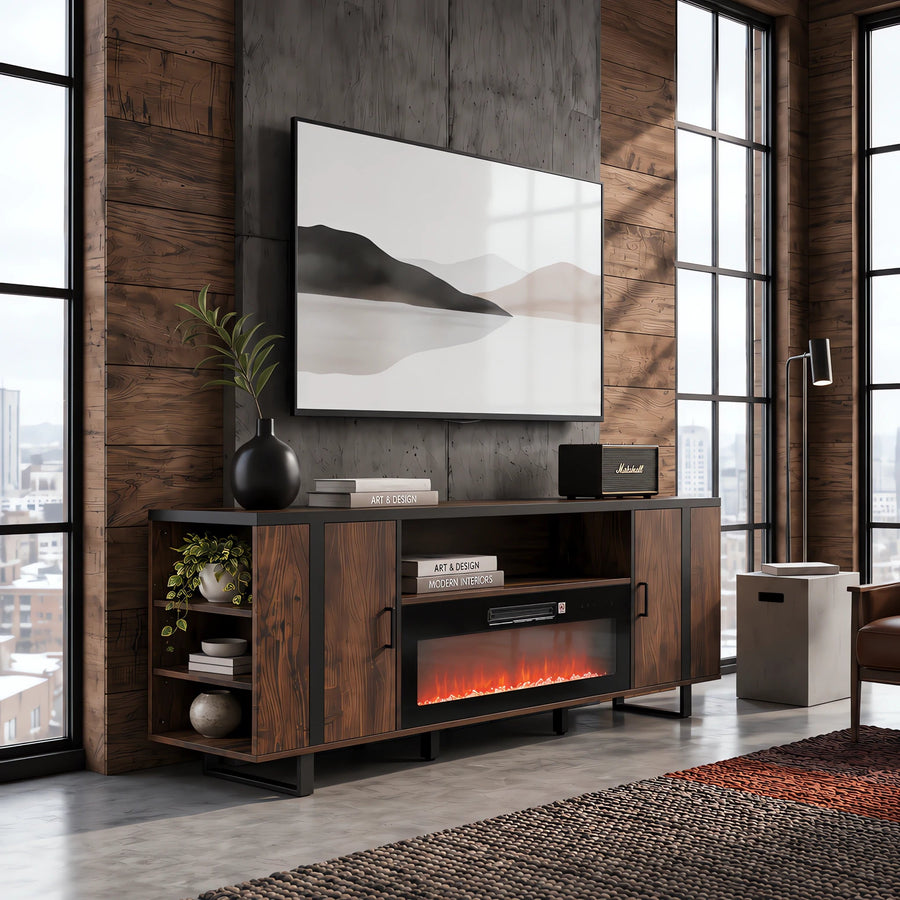
Wooden wall panels can create a warm background and complement natural wood furniture. Stone-effect panels and textured finishes are other options for contemporary living rooms.
Open shelves provide space for books, small plants and decorative accessories. However, avoid overcrowding the area around the screen.
The furniture finish should also suit your existing interior.
|
TV Stand Finish |
Suitable Interior Style |
|---|---|
|
White |
Scandinavian and minimalist |
|
Natural Oak |
Modern and Nordic |
|
Dark Wood |
Contemporary and classic |
|
Black |
Industrial and modern |
|
Grey |
Neutral and understated |
For a cohesive appearance, repeat one or two colours from the TV stand in your cushions, shelves or other decorations.
Consider an Electric Fireplace TV Stand
An electric fireplace TV stand combines entertainment furniture with an integrated fireplace effect. It can create an attractive focal point without requiring a traditional chimney.
Many models offer adjustable flame effects and independent heating functions, allowing you to enjoy the fireplace appearance without necessarily using the heater.
Before choosing one, check its overall dimensions, television compatibility and heating clearances.
The position of the fireplace outlet is particularly important. Do not assume that every electric fireplace is suitable for placing a television directly above it. Follow the manufacturer's installation and heat management instructions.
TV Stand Ideas for Different Living Room Layouts
The best arrangement depends on the shape and size of your room.
Small Living Rooms
Choose a compact TV stand with practical storage. Position the sofa at a comfortable viewing distance and keep the main walking route clear. Light-coloured furniture can help create a more open appearance.
Large Open-Plan Living Rooms
A wider TV stand can create a strong focal point. Use the sofa and TV furniture to define the entertainment area without adding unnecessary partitions.
Long and Narrow Living Rooms
Consider placing the television on a shorter wall if the windows and doors allow it. A long, shallow TV stand can provide storage without reducing valuable walking space.
TV Stand Options from Parrot Uncle
Parrot Uncle offers TV furniture that combines storage, modern design and integrated electric fireplaces.
Noxen 115-Inch TV Stand with Electric Fireplace
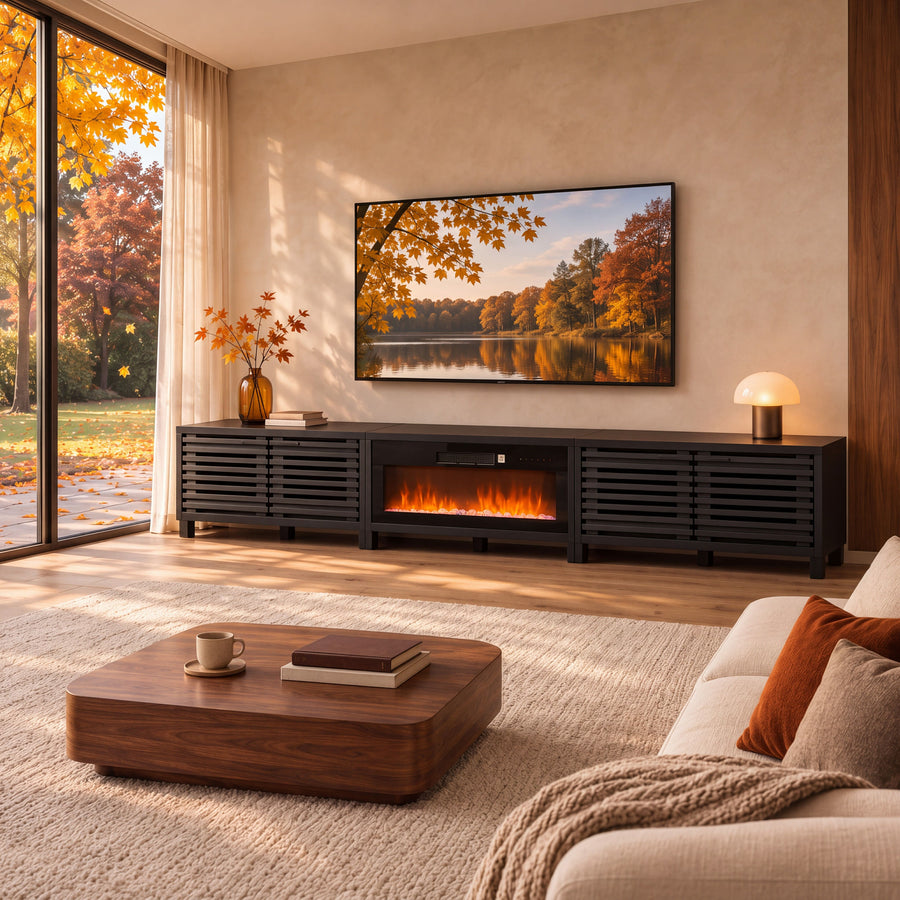
The Parrot Uncle Noxen measures approximately 292 cm wide and features a black finish with three sections for flexible arrangement. It includes a recessed 91 cm electric fireplace and open shelving, making it suitable for larger living rooms and wide media walls.

Ashford 93-Inch White TV Stand with Storage Cabinets
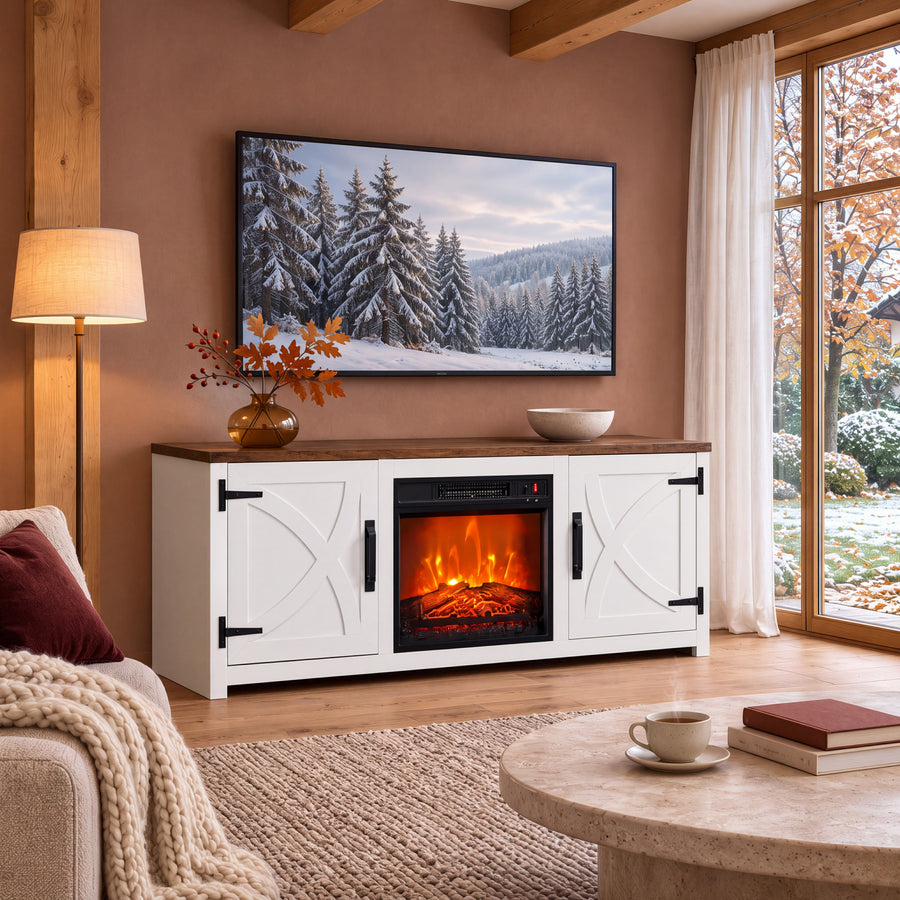
The Parrot Uncle Ashford measures approximately 236 cm wide and combines a white finish, grey wood-effect top and barn-door details. It features storage cabinets, open shelving and a built-in 91 cm electric fireplace, making it a practical choice for farmhouse-inspired living rooms.

Final Thoughts
A well-arranged TV area should balance viewing comfort, furniture proportions and practical storage. Measure your room, position the screen at a comfortable height and choose a TV stand that complements your television and interior style.
Whether you prefer a simple TV lowboard or a larger media unit with an electric fireplace, careful planning can make your living room more organised and comfortable.